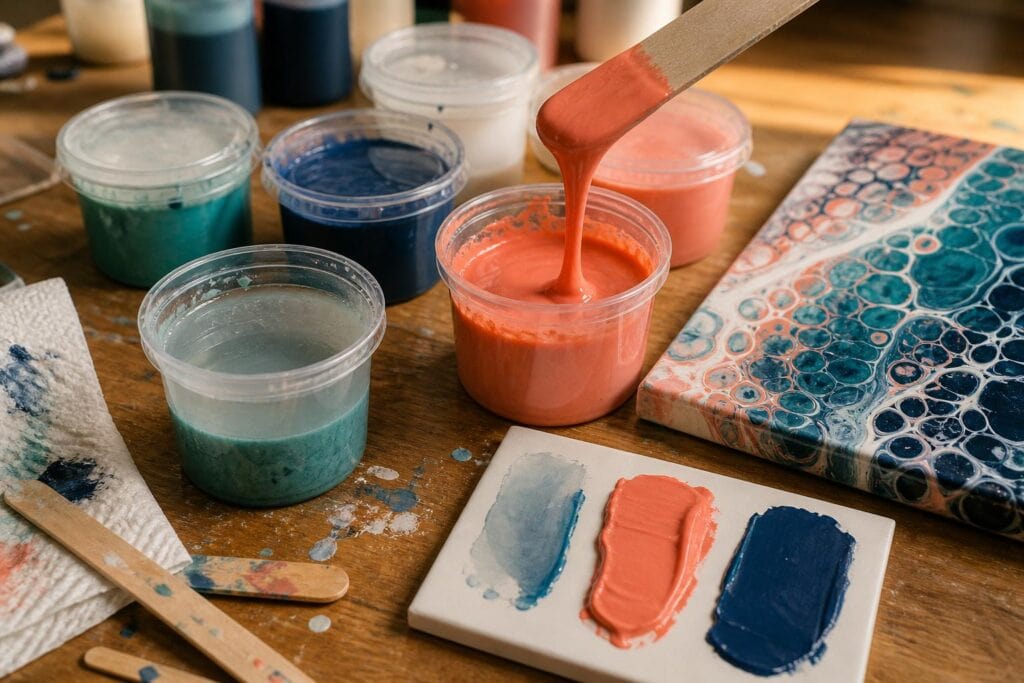
Leftover mixed pouring paint can feel too valuable to throw away, especially when it contains a favorite custom color or a generous amount of pouring medium. The good news is that I reuse mixed paint regularly. The less convenient truth is that I never take it straight from the container and pour it onto an important canvas.
I learned this after saving a beautiful muted turquoise, assuming it was ready, and adding it to a flip cup several weeks later. The paint had thickened just enough to move differently from the other colors. Instead of opening into soft ribbons, it dropped through the composition in heavy blobs and helped create a lopsided pour.
Leftover paint is often perfectly usable, but it needs a quick inspection and consistency test first.
When Mixed Pouring Paint Is Worth Saving
I save paint when I know what went into it and when the mixture still looks clean. Acrylic paint combined with a commercial pouring medium usually stores better than a heavily diluted mixture containing a large amount of water.
I am more cautious with paint that has been sitting in an open cup throughout a long pouring session. Dust, dried paint flakes, and bits from stirring sticks have a way of finding those cups. One mistake I see often is scraping every last bit of exposed paint into a storage container. That can introduce partially cured acrylic pieces that later appear as bumps in the finished pour.
Paint is generally worth saving when it meets these conditions:
- The mixture was made with acrylic paint and a familiar pouring medium.
- The paint has not been contaminated with dirty tools or dried acrylic.
- The container can be sealed completely.
- There is enough paint to use in a future test, accent color, swipe, or small pour.
If silicone oil has already been added, I label that clearly. It can still be saved, but the silicone may separate and the cell reaction can become less predictable. In my experience, beginners get more reliable results by storing paint before adding silicone and adding the oil only when preparing the next pour.
How I Store Leftover Pouring Paint
My preferred containers are small, clear plastic cups with tight fitting lids. Clear cups let me inspect separation, settling, and texture without opening the paint. They also make slow stirring much easier than narrow squeeze bottles.
Squeeze bottles save space and make paint easy to dispense, but I do not think they are the best first choice for beginners. Thickened paint can hide in the nozzle, dried plugs can fall into a pour, and it is difficult to see whether the mixture has developed lumps. For larger amounts of a dependable base color, bottles can be useful. For small leftovers and custom colors, lidded cups are more forgiving.
I store each mixture using this process:
- Transfer clean paint into a clean, dry container.
- Wipe paint away from the rim so the lid can form a complete seal.
- Leave a little room for stirring, but avoid using a container that is mostly empty.
- Label the color, pouring medium, important additives, and approximate mixing date.
- Press the lid firmly around the entire rim.
- Keep the container indoors at a stable room temperature and away from direct sunlight.
I have noticed that a large pocket of air encourages a skin to form more quickly, particularly with thicker mixtures. Choosing a container close to the amount of paint left inside has worked better for me than placing cling film over a half empty cup. Cling film is commonly recommended, but by itself it rarely gives me a dependable seal.
Do not store mixed pouring paint where it might freeze or become hot. A garage or shed may seem convenient, but temperature swings can change the texture of acrylic binders and pouring mediums. I also keep paint containers separate from food containers so there is no chance of confusion.
What to Check Before Pouring With It Again
Open saved paint over a protected work surface. Even a good lid can collect wet paint around its edge. Then work through the following checks before adding the color to a cup with fresh paint.
Look at the Surface
A thin layer of clear liquid on top is often normal separation. Pigment and heavier ingredients settle while lighter components rise. Metallic paints do this more dramatically than many ordinary colors. I have opened saved gold paint that looked nearly transparent on top and dense at the bottom, yet returned to a smooth mixture after patient stirring.
A rubbery skin is different. Lift it out rather than stirring it into the paint. If the skin breaks into many small pieces, I usually discard the mixture instead of risking textured debris across a canvas.
Smell the Paint
Mixed acrylic paint should smell similar to the original paint and medium. A sour, rotten, or mildew like odor is a reason to toss it. Visible mold, unusual foam that remains after standing, or fuzzy growth also means the mixture should not be used.
This is more likely with extremely diluted paint, contaminated tools, or homemade mixtures containing ingredients that were not designed for long storage.
Stir Slowly and Check the Texture
Stir from the bottom with a clean stick, moving slowly enough to avoid whipping in bubbles. Shaking saved paint may be quick, but it can fill the mixture with tiny air bubbles that later appear as pinholes or unwanted surface texture.
Lift the stick and watch the paint fall. I want a smooth, continuous stream that sinks into the surface briefly before blending back in. If it falls in clumps, stretches into gummy strings, or sits on top like frosting, it is not ready for a pour.
Make a Small Test Pour
Before using older paint on a large canvas, I pour a spoonful onto a small test tile or a piece of sealed card. Tilt it beside a little freshly mixed paint. This reveals whether the saved color moves at a similar speed.
What surprised me most when I began doing this was how often paint could look normal in the cup but behave differently during tilting. A thirty second flow test has saved more canvases than any careful visual inspection.
How to Fix Separated or Thickened Paint
Normal separation usually needs nothing more than slow, thorough stirring. Scrape the bottom and sides until the color and texture are even. Allow the paint to rest if stirring introduced bubbles.
If the mixture is slightly too thick, add a small amount of the same pouring medium used in the original recipe. Stir completely, then test again. I prefer adding medium a few drops at a time because it preserves binder strength and makes it easier to match the other colors in the pour.
Water can help in some recipes, but it is easy to add too much to an already diluted mixture. For beginners, matching with pouring medium is the safer approach. Water changes consistency quickly and can weaken the acrylic film when used excessively. It may also make the saved color move faster than the rest of the palette.
Do not try to rescue paint that has become gummy, curdled, foul smelling, or filled with cured fragments. More medium will not reverse acrylic that has started curing. Straining may remove an occasional speck, but it cannot restore a failing binder.
Troubleshooting Saved Pouring Paint
Why did my stored paint become thicker?
The container may not have sealed completely, or too much air may have remained above the paint. Adjust it gradually with the original pouring medium. If a firm skin or rubbery texture has developed throughout, discard it.
Can I combine several leftover colors?
Yes, but combine small samples first. Closely related colors often make useful bases for Dutch pours, swipes, or puddle pours. Opposing colors can quickly create brown or gray. I enjoy making new neutrals this way, but I do it intentionally rather than creating one mystery container.
How long can mixed pouring paint be stored?
There is no dependable date that applies to every paint, medium, dilution, and container. I rely on labeling and inspection rather than assuming a mixture is good for a certain number of weeks. Properly sealed mixtures can remain useful for a surprisingly long time, while a poorly sealed cup may thicken within days.
How should unusable paint be discarded?
Do not pour acrylic paint into a sink. Let small amounts dry completely in a disposable container according to local disposal guidance. For larger quantities, follow the waste rules where you live.
Saving leftover pouring paint is not about preserving every teaspoon at any cost. It is about giving good mixtures another opportunity without gambling an entire composition. Stir slowly, compare the flow, and test a small amount first. If the paint passes those checks, it can become the accent color that makes your next pour feel finished rather than leftover.
